Book Reader Tracking App
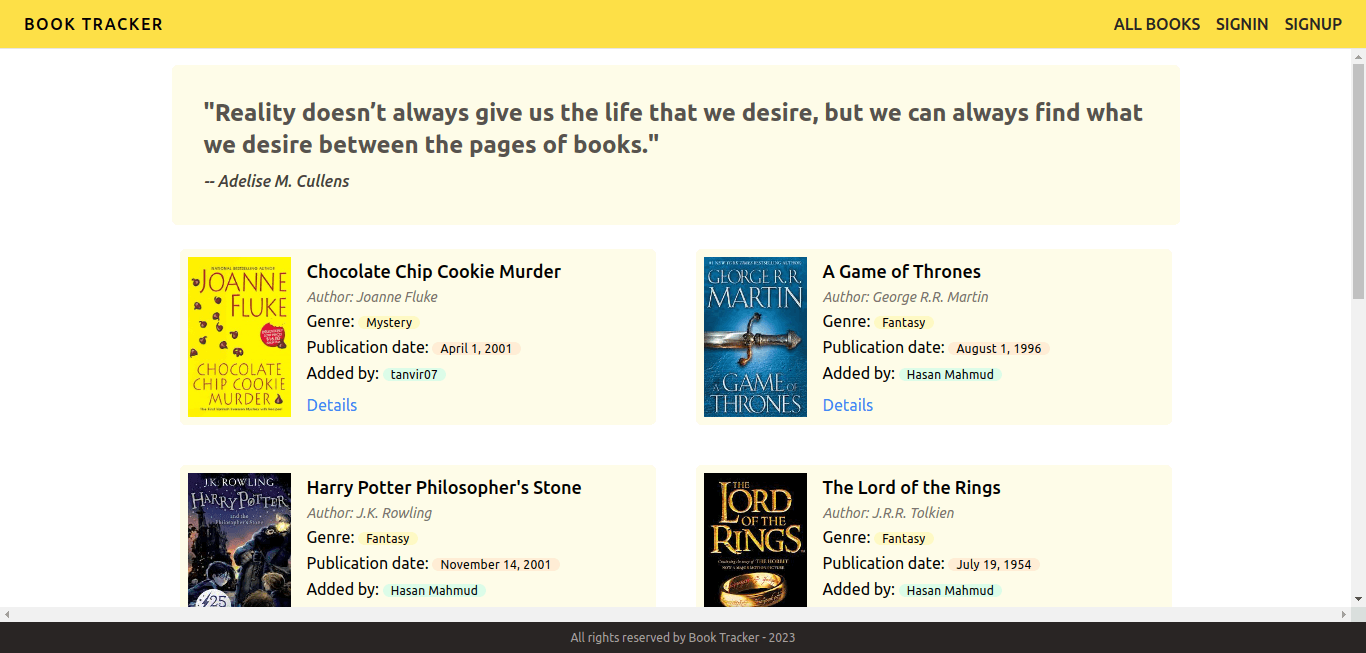
Book Tracker was created around a smaller but very real problem: readers often want a simple system for remembering what they have read, what they are reading now, and what they want to read next. Many tools feel too cluttered or too generic for that habit.
Project type
MERN Stack
Year
2023
Challenges
3
Tech used
8
What Problem It Solves
The app solves reading disorganization by giving users a focused space to manage books, update progress, and maintain a wishlist. It turns reading activity into something visible and manageable instead of relying on memory or scattered notes.
Why I Built It
I built Book Tracker to explore how a focused product can still benefit from thoughtful full-stack design. Not every useful application has to be large or enterprise-oriented. I wanted to create something lightweight, practical, and satisfying to use while still paying attention to structure, usability, and data flow.
Why This Tech Stack
The MERN stack was a natural fit because the project needed quick iteration, a responsive frontend, and flexible handling of book-related data. React and TypeScript supported a clean UI experience, Redux made status changes and filtering easier to manage, MongoDB worked well for flexible book records, and Express with Node.js provided a straightforward backend foundation.
Challenges I Faced and How I Solved Them
Keeping the experience simple while supporting multiple states
Even a small product becomes confusing when users cannot clearly understand statuses like reading, completed, or want to read. I made the interface more intentional by structuring the main flows around those states and making updates visible immediately.
Making filters and progress feel helpful, not decorative
Search, filtering, and reading stats only matter when they support actual behavior. I designed those features to help users quickly understand their reading habits and find books without unnecessary complexity.
Building a polished experience for a compact app
Smaller products leave less room to hide weak UX behind complexity. I focused on responsiveness, clarity, and smooth CRUD interactions so the product felt deliberate rather than like a demo.
Outcome
Book Tracker became a strong example of product restraint. It shows that I can build smaller applications with the same care I apply to larger systems, focusing on clear user value, clean state handling, and an interface that encourages repeat use.